
Restoring Trim Details Without Starting Over
Molding Repair in Chattanooga for damaged, separated, or worn molding that disrupts room finishes
Cracks run through crown molding after settlement shifts ceiling joists, baseboards pull away from walls where flooring was replaced without adjusting trim height, and corner joints open when seasonal humidity causes wood movement. Homeowners in Chattanooga see these issues develop from everyday wear, remodeling that disturbs adjacent surfaces, or impacts that splinter decorative profiles. Mabry Construction assesses which sections need repair versus replacement and matches surrounding profiles and finishes when practical so repaired molding blends with existing trim.
The repair process begins by determining whether molding can be reattached, filled, and refinished or whether damaged sections require replacement. Separated joints receive new fastening and adhesive, cracks get filled and sanded to match the profile, and missing pieces are reproduced or sourced to fit the existing pattern. Matching finishes involves evaluating stain color, paint sheen, and any aging that has occurred since original installation.
Request a repair estimate to evaluate molding damage and review matching options for your trim.
What Molding Repair Actually Involves
Repair work addresses the specific failure mode—separated joints are reglued and pinned, cracked sections are filled and sanded smooth, and profiles damaged beyond repair are cut out and replaced with matching stock. Crown molding repairs often require accessing attic spaces or removing ceiling fixtures to refasten loose sections. Baseboards may need removal to address wall or flooring changes that caused the original separation.
After repair, molding sits flush against walls and ceilings again, joints close without visible gaps, and refinished sections blend with surrounding trim under normal lighting. The room regains its finished appearance without the expense of replacing all trim, and adjoining walls or ceilings remain undisturbed. Paint or stain applied to repaired sections matches closely enough that differences are not obvious from typical viewing distances.
Some molding profiles are no longer manufactured in exact dimensions or patterns, which means repairs to historic or custom trim may involve custom milling or close approximations. Standard profiles available at lumber yards make matching easier for newer homes, while older properties sometimes require more detailed reproduction work to maintain consistency across rooms.
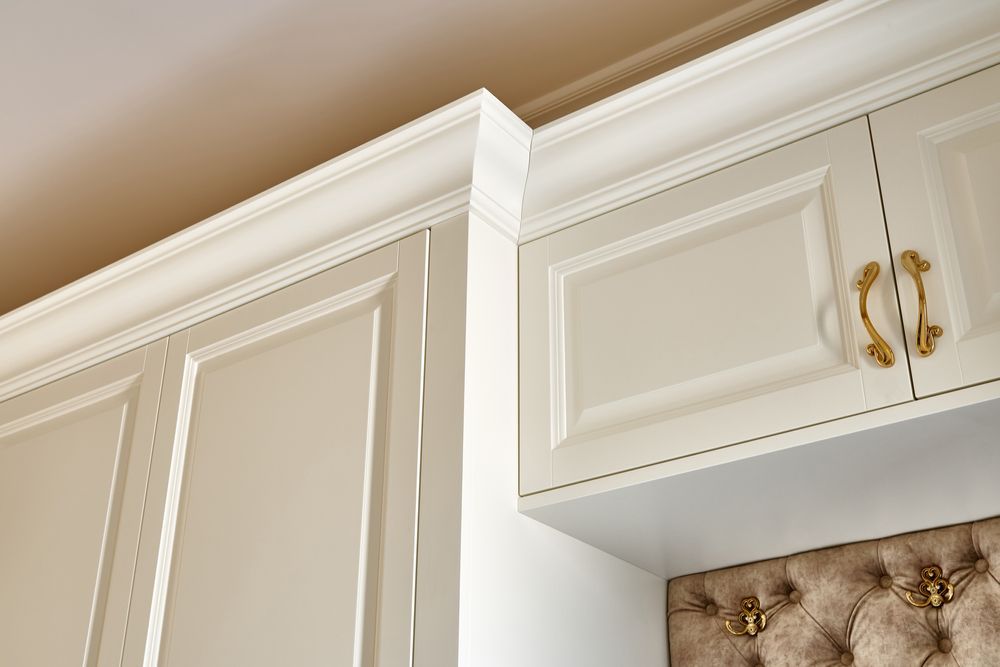
Questions About Repairing Molding
Molding problems prompt questions about whether repair is practical and how well finishes will match after the work is complete.
What causes molding to separate from walls or ceilings?
Settlement, wood shrinkage, and changes to adjoining surfaces during remodeling all create movement that opens joints or pulls molding away from its backing. Humidity fluctuations in Chattanooga contribute to seasonal expansion and contraction that stresses fasteners and adhesive bonds.
How do you match molding profiles that are no longer standard?
Common profiles can be sourced from current stock, while custom or historic profiles may require milling new sections to match the existing pattern. Matching depends on how complex the profile is and whether similar stock exists.
When should molding be replaced instead of repaired?
Replacement makes sense when damage extends across multiple sections, when the profile is severely compromised, or when surrounding trim is also deteriorating. Isolated damage to a single section usually repairs well without full replacement.
Why do some repairs show color differences after finishing?
Wood absorbs stain differently depending on grain density and age, and paint sheen changes as it cures over time. Repaired sections may appear slightly different immediately after finishing but often blend better as finishes age and ambient light neutralizes small color shifts.
What is included in a molding repair estimate?
The estimate covers assessment of damage, removal or refastening of affected sections, filling or replacement, finish matching, and any coordination with adjacent walls, ceilings, or trim. Complex profiles or custom milling add to material and labor costs.
Mabry Construction evaluates molding damage carefully to determine the most practical repair approach and finish matching strategy for your trim. Arrange a repair assessment and estimate by calling (423) 637-2482.